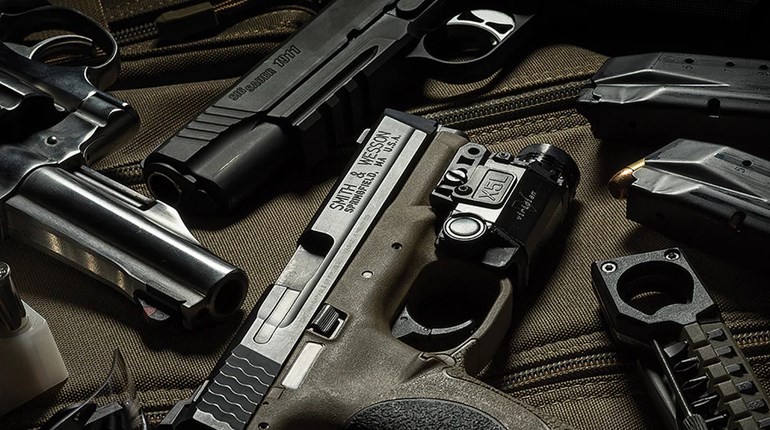
I was recently made aware of a police officer who was wounded during a gunfight while responding to a domestic disturbance call. While the officer will recover, the amazing thing was that in the middle of the fight he had a failure-to-feed in his semi-automatic pistol. While a failure-to-feed is not uncommon, this one occurred because he had loaded the wrong caliber in his pistol. While I don’t know any details as to how this could have happened, it does bring to mind the importance of carefully examining the ammo loadout for your defensive handgun.
Periodically, say once a quarter, it is a good idea to end a practice session by firing your carry ammo. Then, having thoroughly cleaned and lubricated your defensive gun, you load with fresh carry ammo. But, the important thing is to take the time to carefully examine every cartridge that will be loaded into your gun and carried on your person.
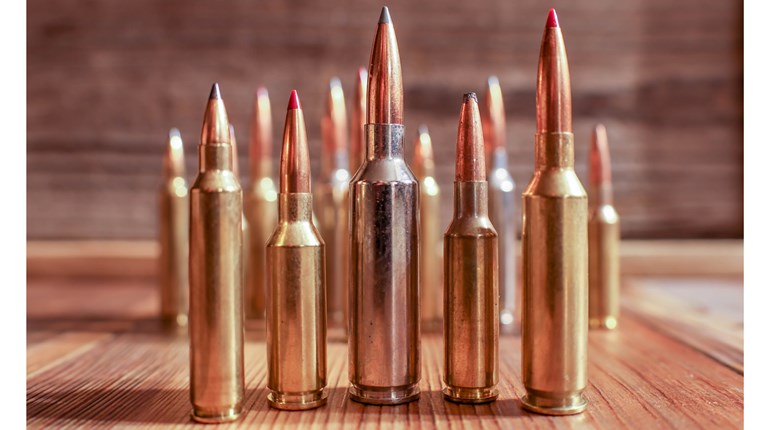
What you are looking for (besides making sure it is the correct caliber) is any defect in the cartridge. We’re talking about damaged cases, damaged or improperly seated bullets, high primers, upside-down primers or no primers at all. If there is the least bit of doubt the cartridge should be set aside or disposed of.
Our major ammunition companies do a really good job of maintaining quality control but it is never 100 percent. Anyone who has been shooting for very many years has seen every one of the problems that I have mentioned above.
Several companies also market little tools called cartridge gauges. You simply drop one cartridge at a time into the gauge. If the cartridge fits in the gauge, it will fit in your gun. Also, shooters of semi-automatic pistols can simply field strip their gun and use the barrel chamber for a gauge. Just be sure to field strip the gun and just use the barrel itself; negligent discharges are embarrassing, you know.
High primers can usually be detected by visually comparing them to the other cartridges and/or by simply running your finger over the base of the cartridge. Again, if there is any doubt, set them aside.
The key is to set aside the time to do your ammo inspection every time you switch out your carry ammunition. Make it a habit and make the commitment to not skip it during the loading process. Hearing a click when you are expecting a bang can be a shocking thing.