According to the best data that can be accumulated, the majority of citizen-involved shooting occur at very close range, something like 3 to 7 yards. While I won’t argue with that, I simply point out that this is some sort of an average. My next question is, “What happens when you are the exception to the rule?”
Going with the available data, it makes sense that most of an armed citizen’s practice should be for the up-close encounters, but it is also an excellent idea to know what your chosen gun and load will do at greater distances. We should always keep in mind that the fight is going to be what it is going to be and we might very well have to deal with an attacker at 25 yards, 50 yards or even greater distances.
The first law enforcement agency that I worked for regularly required us to qualify over the Police Pistol Course which included shooting at 7, 15, 25, and 50 yards. We learned what our guns would do at these distances and shooting at a distance also taught us the importance of a proper sight picture and smooth trigger press. Just as importantly, developing shooting skills at a distance enhanced our confidence in our own skills and equipment.
Now some argue that, when shootings occur at such distances, the armed citizen is better served by taking cover or exiting the scene. While I agree the possibility might occur, I would also suggest that one can easily create scenarios where the armed citizen simply has to return fire, accurate fire. An example might be when a family member is out in the open, running for cover, and you have to direct accurate fire at the attacker to protect that family member.
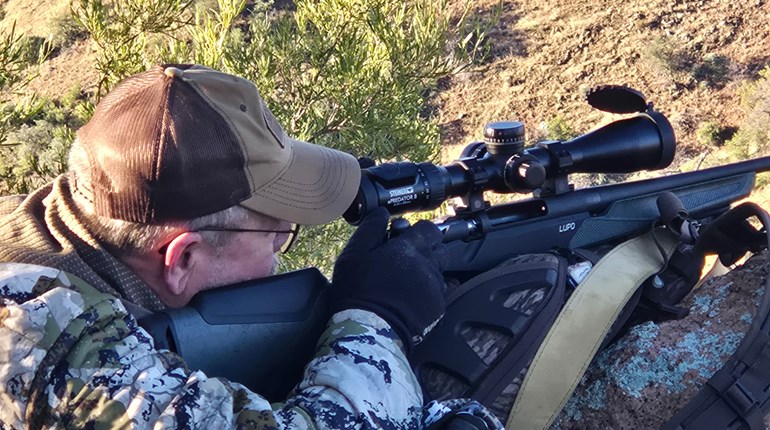
So, I would suggest that some of our defensive practice should be done at longer ranges. Practice at 50 yards, and even further, is not unreasonable. Further, if you decide to shoot at steel for those longer shots, you should use the smaller steel plates, 8 to 10 inches, to really test your ability. It is also a good idea to work up some field positions (braced, kneeling, etc.) to enhance accuracy.
Shooting at greater distance magnifies our mistakes and makes them easier to identify and correct. Distance shooting also can tell us a lot about our gun, caliber, and ammunition choices. And as we improve our skills at distance shooting, our close-range skills are enhanced as well, and it helps the legally armed citizen to deal with whatever the threat might be, at whatever distance.