I suppose that it is human nature, but most of us tend to do the same thing when we focus on a difficult task. We tend to pull the object in close to our bodies, about belly high, and bend over slightly to focus on what we are doing. That seems to get the job done for most of the tasks that we encounter in life, but it can get you killed in a gunfight.
Our general plan in a gunfight is to stop the threat as quickly as possible. But then Murphy and his unavoidable law takes charge of the situation. We suddenly find that we have to reload or clear some sort of malfunction. We have to do it quickly if we expect to survive this deadly encounter. If you let Mother Nature take charge, you will likely find yourself slightly bent over, staring intently as you try to correct the problem.
In a gunfight, the problem with this method is that you will likely lose track of what is going on around you. Gunfights are dynamic affairs. Bad guys are probably not going to stand in front of you, all nice and squared away like a B27 target. In fact, they are likely going to be moving in order to take advantage of the situation. When you finally do look up, assuming you have survived thus far, you must now look around to locate the threat. All of that wastes time. Time is the one thing you can't afford to waste when under attack.
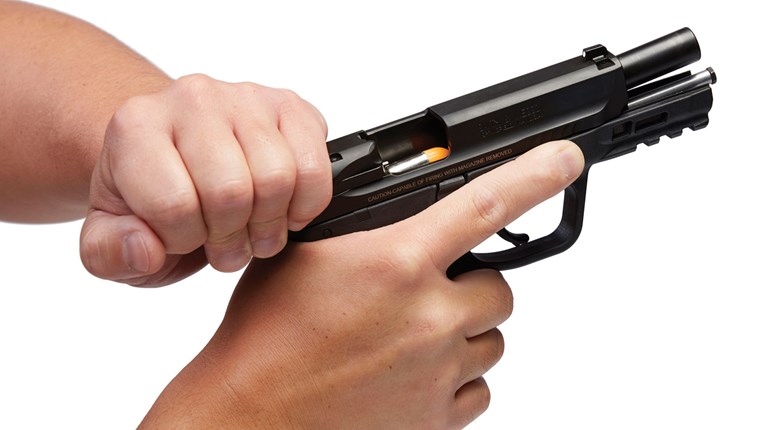
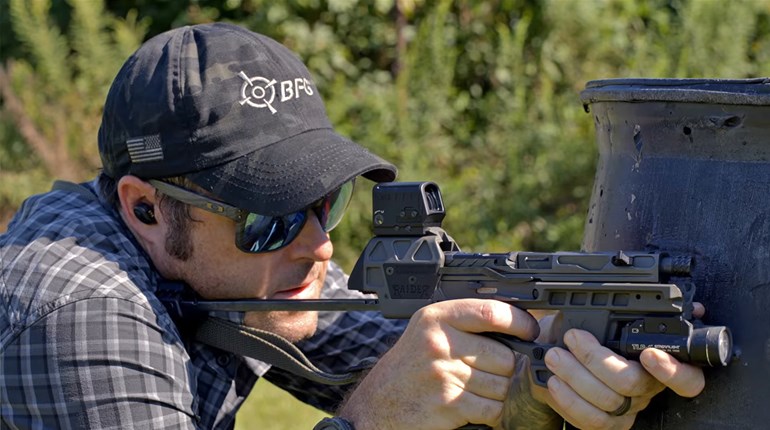
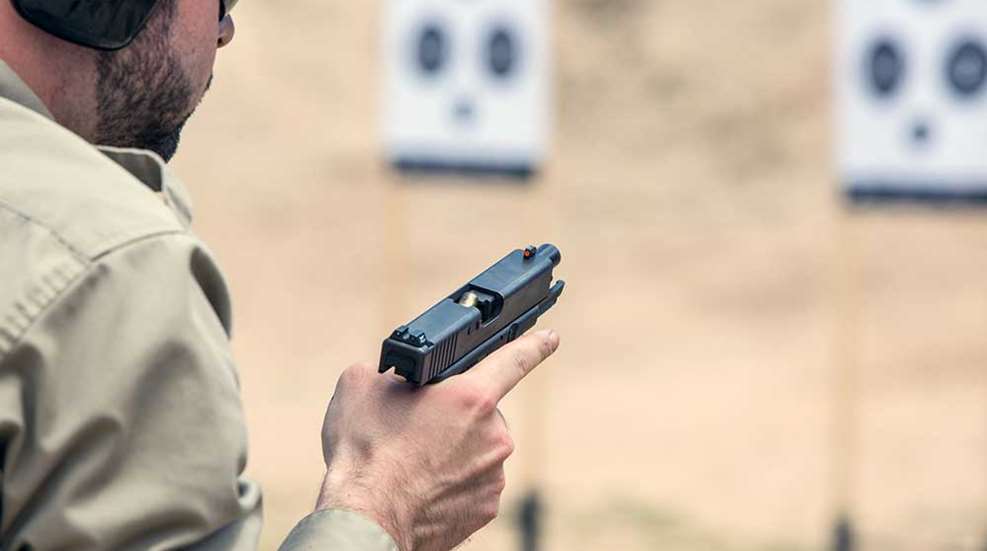
A better method is to perform necessary functions with your hands in a higher position. Hold the gun up somewhere between your shirt pockets and your collar bone. Pull it in to about 9-to-12 inches from your body. In this manner, you can keep your head erect and are much more able to see what is happening around you while you work to get your pistol back in the fight. Should you need to glance at your pistol during this time, it is much easier to do and still see what is going on around you.
Fortunately, self-defense shootings rarely require a reload, and a properly maintained pistol will rarely malfunction. However, these things do happen and a smart person will plan and train for them. Murphy is not your friend. And, more importantly, Murphy can get you hurt.
When performing pistol manipulations of any sort, hold your gun high enough that you can still keep your head erect, your eyes working and your mind alert. Practice the various pistol manipulations enough so that you can perform them quickly with a minimum of fumbling, minimizing the amount of time you actually have to look at the pistol. Keep your hands up and your eyes on the threat.