Some years ago, a police officer in Utah did some tests regarding reaction time and determined an assailant, armed with a knife or club, could attack his opponent from 21 feet before the other could react and get a shot off. The problem, of course, was the defender had to identify the threat, determine a course of action and then act. And he had to do all of this in about 1 to 1.5 seconds. Meanwhile, the attacker is rapidly closing ground and delivering his blow.
Now, Internet commandos notwithstanding, there are extremely few people who can deliver death with one strike of a knife. In fact, in this type of close-range attack the club—or blunt object of various kinds—is really the deadlier weapon. Regardless, no one wants to be cut with a knife or, for that matter, injured in any way by a determined attacker.
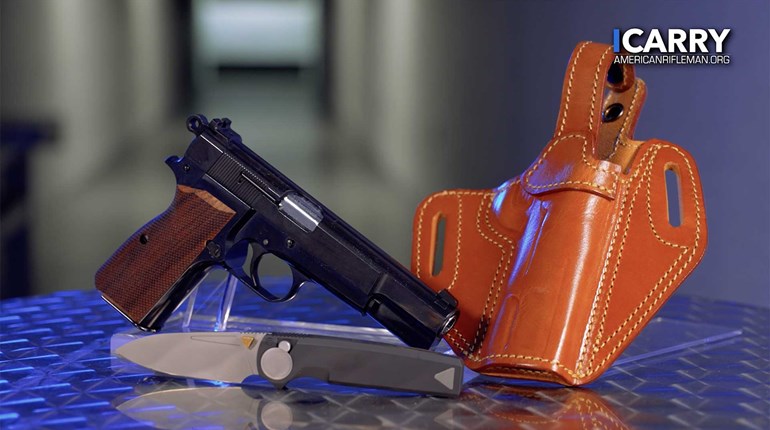
The proper response to this type of attack is a fast draw, accurate shot and lots and lots of practice. And, one should not cheat in his practice by using range gear. The practice should include the use of the covering garment and holster worn for concealed carry.
In addition, it may be an excellent response to fire the stopping shot with one hand, instead of two. The support hand and arm should be engaged in one of several blocking tactics to ward off the attacker's blow. Just remember, whatever blocking technique is used, the support hand must always be clear of the firearm. Shooting yourself in the hand or arm is not an effective response to any sort of attack.
Given the need for a blocking action, the defensive shooter should avoid using a concealment holster that requires two hands to engage. Fanny packs and ankle holsters are two that come readily to mind. The support hand must be ready to block, giving the defensive shooter time to complete his draw and deliver the fight-stopping shot.
Because this type of response is fast and involved, it is a great idea to develop a personal technique during dry practice. Once the basics become habit, the shooter can then head for the range and work out on close-range targets.
Being attacked from 21 feet does not automatically mean you have lost the fight, and you won't lose the fight if you plan and practice ahead of time.