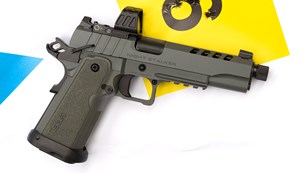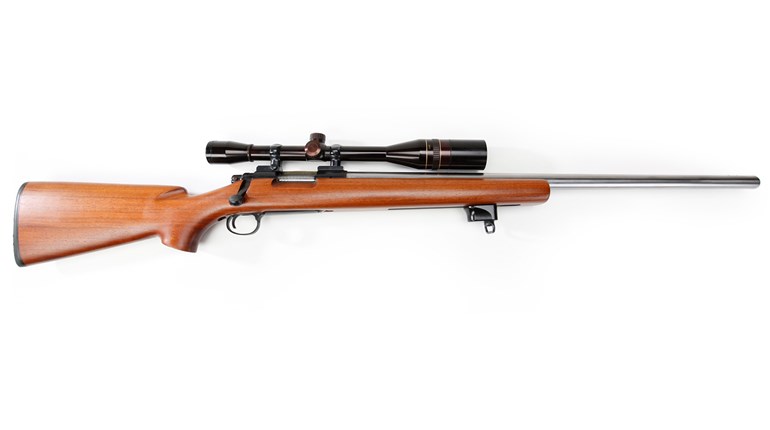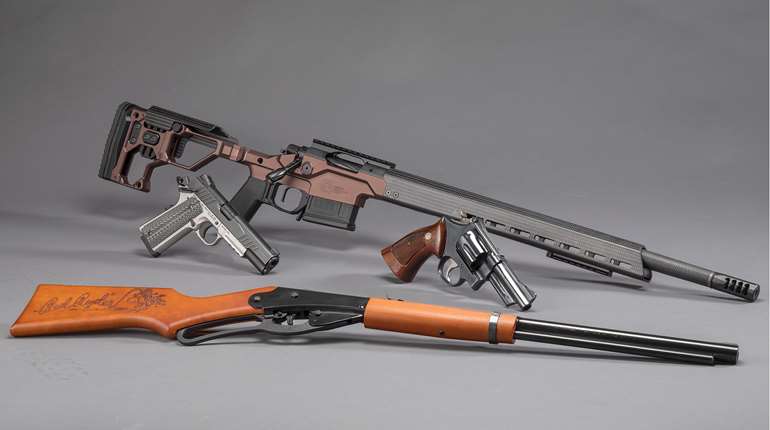
I am predominantly a handgun guy who likes to explore different angles in how pistols are made for their respective uses and why they were made that way. I have quite a few defensive-style handguns, some hunting handguns and some competition handguns as well.
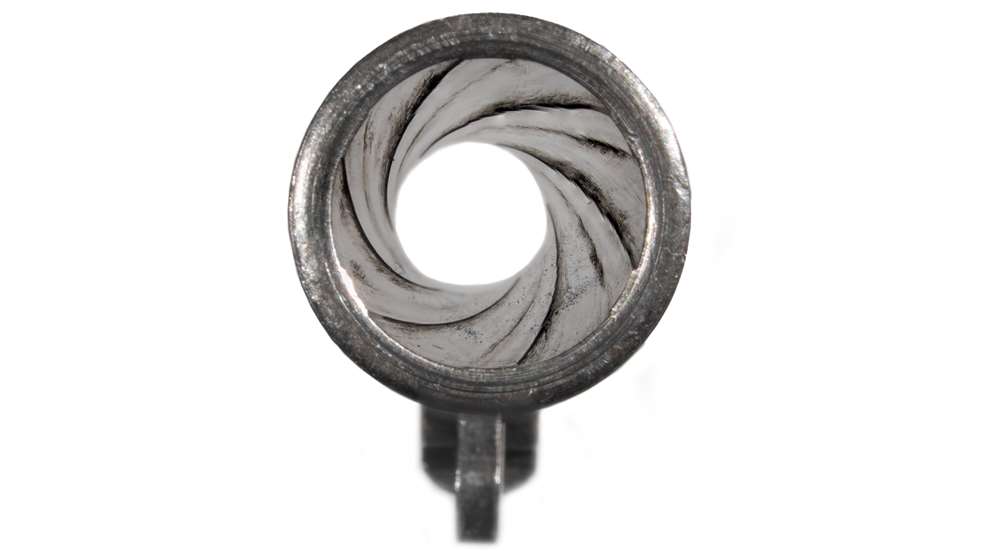
While on a recent cleaning binge of my .45 ACP pistols, I noticed that some of the barrels had a right-hand twist, while the majority had a left-hand twist. This got me wondering why that was and what the difference between the two may be.
My curiosity got the best of me, and I decided that I would take a quick look through some of my single-shot hunting handguns that I have in duplicate calibers. I found two chambered in .30-30 Win. and two in .35 Rem. that had the opposite directions of twist.
Later, when I was cleaning my battery of .22 rimfire pistols, I noticed for the first time that some had a right-hand twist, and while others had left.
In all the time I have been shooting these guns, I have noticed no difference in performance of one over the other. So, my question is, why would a manufacturer choose one twist direction over the other, since there is seemingly no advantage to either?
Vern Loll, Springfield, MO
This is a very controversial question that stimulates lots of opinion, but little in the way of facts to back it up. Most of the opinion comes from shooting rifles with heavy recoil or at long distances beyond the usable range of most handguns.
British gunmakers, for example, building safari rifles for right-handed hunters, would select left-twist barrels so the gun torqued away from the cheek when fired, lessening the felt recoil and hopefully allowing the shooter to recover to the target quickly for a follow-up shot if needed. For the left-handed shooter, the barrel selection would be the right twist for the same reason of dealing with the heavy recoil related to that type of rifle.
Related to rifles at distances of 300 yards or farther, spin drift can become a factor that will affect the impact of the bullet on the target. Long-range shooters correct for spin drift in right-twist barrels by making windage adjustments to the left as the distance increases. It is just the opposite for left-twist barrels that require a windage adjustment to the right to keep the bullet impact centered on the target.
Further in that vein, it can be proven mathematically that one twist direction is better when used in the Northern Hemisphere and the other is better for use in the Southern Hemisphere in addition to benefits to countering the Coriolis effect on long-range precision shooting.
This may be so, but I have never met or heard of a shooter who put all that into practical application. Also, note that all of the above examples involve rifles, and most of the scientific explanations involve shooting at extreme ranges—the Coriolis effect is not going to have any measurable influence on accuracy with a handgun shooting a standard handgun round at realistic handgun ranges.
In reference to the .45 ACP specifically, I am aware of tests conducted by some of the military teams regarding twist rates and direction, in an attempt to wring the absolute maximum performance from their match guns. This effort was put forth to give their national-level shooters an edge over their counterparts. I am unaware of any discernible game-changing difference that would favor one twist direction over another. If any irrefutable evidence had come from these tests, there would have been a wholesale effort for change across the board. This did not happen.
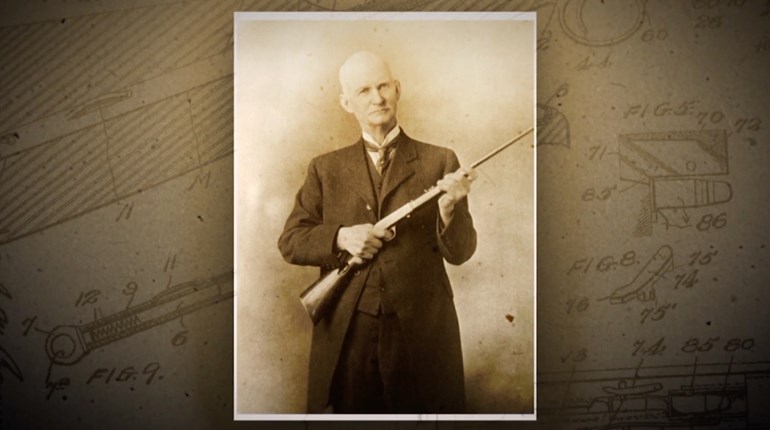
It is speculated that when John Browning invented the 1911, he designed it as a right-handed pistol for the Cavalry Soldier who could handle the reins with the left hand and shoot with the right. The left twist in the barrel was designed to torque the gun into the palm of the right hand, lessening the likelihood of the Soldier losing control of the pistol during firing. This makes a lot of sense, but is unsupported by any evidence as far as I know.
In quizzing some of the barrel makers in the industry as to why they make right- or left-hand twist barrels, the answer is pretty standard. Their machines are set up for what they make, which ultimately comes from what the everyday customer wants.
In the end, it seems there is little discernible difference between left- and right-twist barrels. It is a matter of personal preference or manufacturing inertia as much as any practical application.