As responsible armed citizens, we fight reluctantly. If there is a way to safely avoid a conflict, we take it. However, there may well be those times that an attack is visited upon us and we simply can’t avoid it. Further, since life isn’t fair, we may be injured during this attack. When it is the real deal, you can’t call “time out” and go get medical aid; your only hope is to keep fighting.
Some folks seem to think that being shot equates with being killed. However, a check of criminal attacks and shooting incidents shows that the majority of people survive their injuries. History is replete with examples of soldiers, law-enforcement agents and citizens who continued to fight in spite of their injuries and prevailed. Here are a couple of examples.
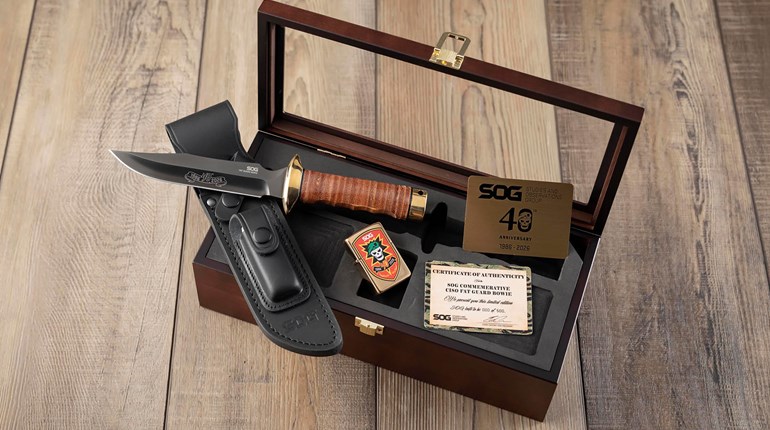
In 1827, the frontiersman Jim Bowie was an observer at a duel in Louisiana. The duel quickly turned into a general brawl in which Bowie was shot at least twice. And, while he was on the ground, knocked down by gunshots, an enemy of Bowie’s took the opportunity to run him through with a sword cane. With his pistol empty, Bowie resorted to his ever-present knife and successfully ended the attack. While attending a duel—in any capacity—was not a wise choice, Bowie, though severely wounded, continued to fight and survived.
In the 1980s, the FBI engaged a pair of bank robbers in Miami, FL. During the shootout, Agent Edmundo Mireles, Jr. received a very nasty wound to his left forearm, probably from a .223 Rem. fired by one of the bank robbers. Following this injury, Mireles continued to run his Remington 870 shotgun, cycling the action one handed. When the shotgun ran empty, Mireles closed on the pair with his service revolver and brought an end to the shootout.
The armed citizen should understand the chance of injury during a criminal attack. And, he or she would be wise to give some thought as to how they will function and continue to fight in spite of their injuries. Here are some things, in no particular order, that would be important to consider.
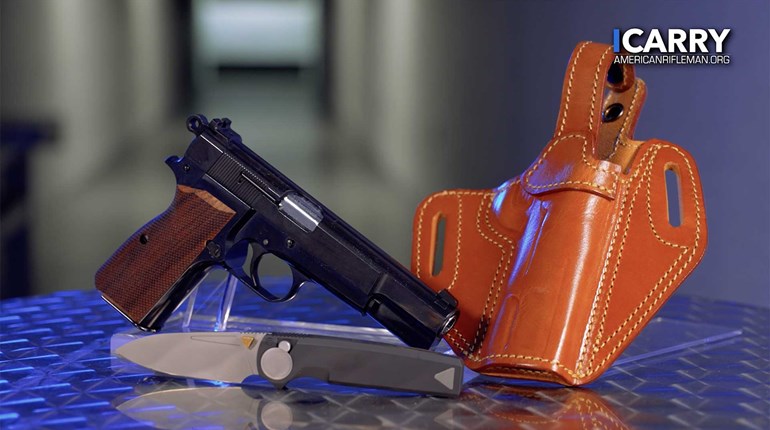
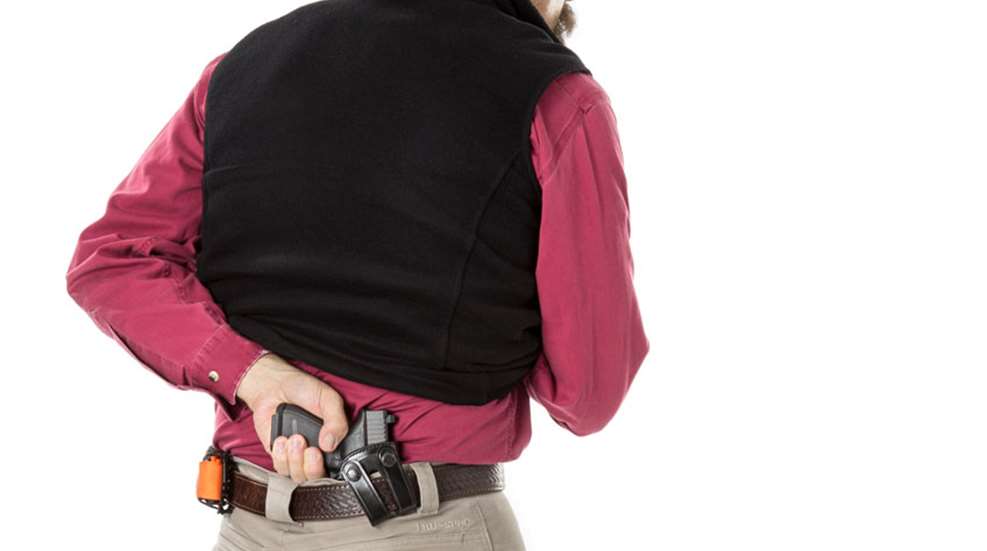
While some defensive shooters practice shooting with their support hand, few of them practice making the pistol presentation with the support hand. The strong hand, the shooting hand, may very well be injured, or otherwise engaged, at the outset of an attack. For this reason, it is an excellent idea to use a holster and carry position that allows the shooter to draw with the weak hand. And, during dry practice, it would be a good idea to devote some time practicing this support-hand draw.
It is also just as important to be able to reload the defensive handgun with the support hand. Most shooters will find that they are not able to perform with any great speed, but being able to reload with the support hand will certainly help keep one in the fight.
Once the defensive shooter has completed training that advances beyond beginner, it would also be a good idea to practice shooting from various positions other than standing, kneeling and prone. The first indication that an attack is being initiated might be when one is knocked flat on one’s back. Being able to draw the defensive handgun and shoot effectively from that position would be a good thing to practice.
Other things to practice might be to shoot while lying on one’s side. And, suppose that your master eye is injured—can you obtain a sight picture and deliver accurate fire using your non-dominant one?
An interesting exercise would be to get a group of shooters together and discuss the various ways that a person might be injured during a criminal attack and brainstorm ways to continue to fight in spite of these injuries. Even better, book a class from a professional defensive instructor who covers these responses.
One of the things that allows the defensive shooter to keep fighting is avoiding rapid blood loss. It would be an excellent idea to obtain and start carrying a tourniquet. There are several on the market designed for one-handed application.
When defensive shooters imagine dealing with a violent criminal attack, they rarely give much thought to the fact that they could be injured. Therefore, when they do get hurt, it comes as a shock to them and they don’t know what to do next.
The first step to dealing with injury in a realistic way is to accept the fact that it can happen to any of us. It doesn’t mean that we are dead or dying. It does mean that we will have to grit our teeth and keep fighting because therein lies our best chance for survival.
The second step is to consider the things that might happen to us and to develop and practice ways to overcome those problems. This might cause us to examine the type of defensive firearm, ammo and carry method that we use. It will also give us some idea of scenarios and shooting drills that will help us defend ourselves while injured.
Combining these two approaches will help us deal with whatever might come our way. Mental conditioning and training will help the defensive shooter to take the position: “I did not want to fight. I did everything I could to avoid the fight. But, I will survive and I will keep fighting until I am no longer under attack.”