These days ammunition is scarce and expensive, and it looks like this situation is likely to persist for some time. Although most of the drills I’ve written up in this column are designed to be practiced with less than a box of ammunition, we’re at the point where even this small amount of ammo is hard to come by—or can’t be replaced. What can you do to maintain your skills? The answer is dry practice.
You might be surprised to learn we make extensive use of dry practice during our shooting classes at Gunsite. “Wait,” you say, “Isn’t Gunsite a shooting school?” Yes, it is, but we consider dry practice to be essential for skill development. Students are given dry-practice homework assignments and we start most range sessions with dry practice. You see, most skills need many thousands of correctly performed repetitions to become reflexive—able to be performed without conscious thought—and dry practice is an efficient way to perform those repetitions.
The beauty of dry practice is you don’t need to go to the range—you can do it at home, but there are some important safety considerations.
First, pick a place where you can do your practice without being interrupted. Next, remove all ammunition from the area, check the firearm, then check it again, to make certain it is unloaded. Check it a third time to be extra certain. Set up a dry-practice target where a solid wall or other object will stop a bullet if you accidentally fire the gun.
Now tell yourself, “I’m starting dry practice.” Give it 10 minutes of concentrated practice then tell yourself, “I’m finished dry practicing; not one more time.” If you’re interrupted for some reason, go back to the beginning and start over; check the gun once again and tell yourself you’re doing dry practice.
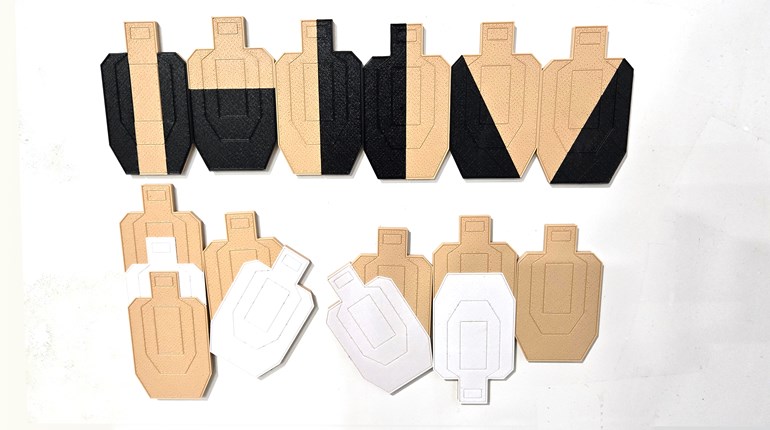
It’s also a good idea to have a specific dry-practice target you can set up and put away. This way, you designate it as the only thing in your home you will point a gun at (and pull the trigger). In my case, it’s a couple of sets of police body armor I hang up in my garage.
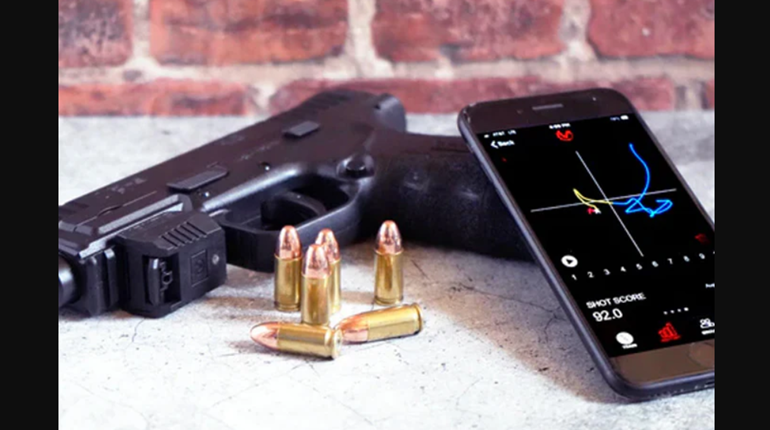
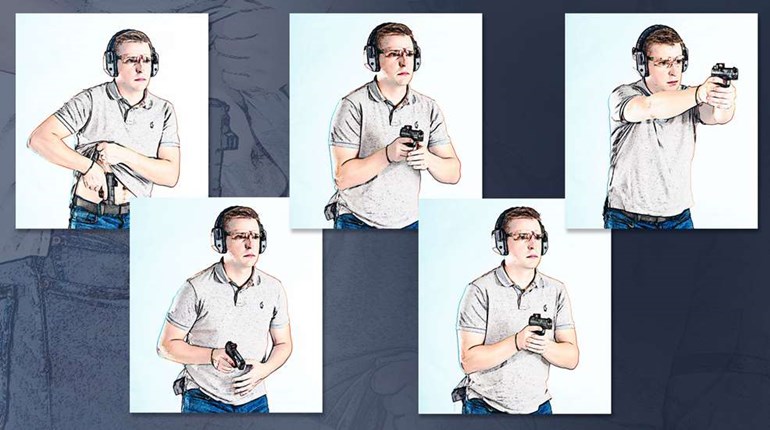
What should you practice? I think sticking to one skill at a time is a good idea. Establishing your stance and grip, pointing in at the target, aligning the sights, focusing on the front sight and pressing the trigger to the rear without disturbing the sight picture is one example, practicing your presentation from the holster is another. Reloading is another skill that benefits from practice and can be done with (double-checked) empty magazines.
Doing 10 minutes of dry practice several times a week should be your goal. Do this, then let me know if you see an improvement in your shooting when you get back to the range. You might be pleasantly surprised.