In the world of firearms, specific to open and concealed handgun carry, the holster is often an unsung hero, silently safeguarding both the firearm and the wearer.
Over time, the holster has undergone a remarkable journey of transformation, evolving from simple leather sheaths to advanced handgun-retention systems that cater to the demands of military, law enforcement and civilians alike. The origin, history and development of retention holsters are a testament of shooter ingenuity and the ever-evolving landscape of firearm technology.
Humble Origins
The roots of the holster can be traced back to ancient civilizations, where rudimentary forms of sheaths or scabbards were used to carry the likes of swords and knives. These early holsters were typically crafted from leather or fabric, providing a simple means of accessibility by carrying a weapon close at hand.
As firearms emerged, so did the need for holsters designed to accommodate these new tools. The earliest pistol holsters were often crude leather pouches, providing little more than a convenient way to carry a firearm. Security, ergonomics and retention were not priorities for these early designs.
The mid-19th century saw the advent of revolvers, which introduced new challenges and opportunities for holster design. Holsters became more specialized to accommodate these wheel guns. However, the primary focus remained on accessibility rather than retention. Most holsters of this era were open-top designs, allowing quick access to the firearm but offering minimal security.
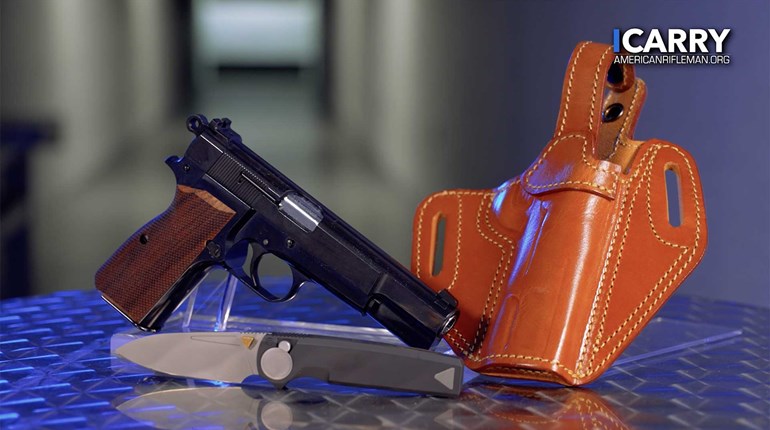
It wasn't until the late 19th century that the first attempts at retention were made. The "Texas" or "Mexican" style holster featured a strap that secured the firearm in the holster, offering a rudimentary form of retention. While not as sophisticated as modern retention systems, it was at least a step in the right direction.
Holsters for Semi-Automatics
The early 20th century brought semi-automatic pistols into prominence. With the introduction of these firearms, holster design once again had to adapt. The first holsters for semi-automatic pistols were similar to their revolver counterparts, open-top and offering minimal retention.
However, World War I served as a catalyst for change. The need for secure holsters became apparent in the trenches, where the chaos of battle required soldiers to keep their firearms firmly in place. The flap holster, with a top cover secured by a button or strap, became the standard issue for many military forces. It was an early forerunner of modern retention holsters, ensuring that the firearm stayed put even in tumultuous situations.
Military and Police Innovations
The mid-20th century witnessed significant advancements in holster technology, largely driven by law enforcement and military needs. The need for quick and reliable access to firearms, combined with enhanced retention, became paramount. This led to the development of new materials such as Kydex (originally produced in 1965 by Rohm and Haas, having been originally designed for use in aircraft interiors), and practical innovations such as thumb-break holsters, featuring a strap or snap that could be quickly released with a downward motion of the thumb.
The 1970s marked a pivotal moment in holster evolution with the introduction of the Safariland ALS (Automatic Locking System). This groundbreaking design incorporated a rotating hood that locked into place when the firearm was holstered, adding a significant level of security. The ALS retention holster (and with the latter development and production of the GLS (Grip Lock System) and the QLS (Quick Lock System)), set a new standard for retention holsters, balancing accessibility and safety.
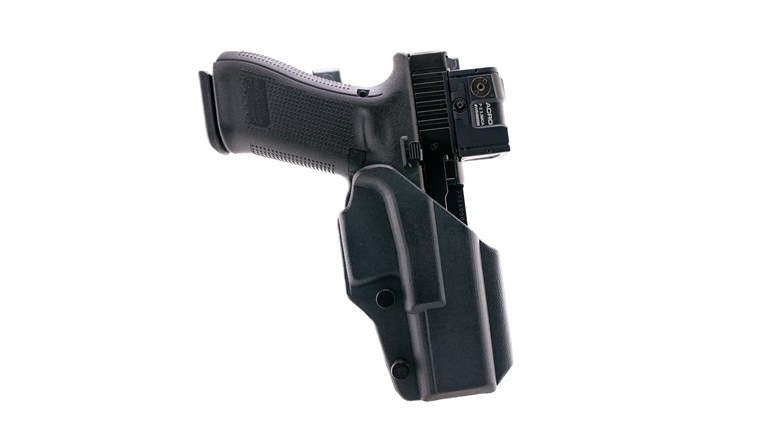
Today, retention holsters have reached unprecedented levels of sophistication. They cater to a wide range of users, from law enforcement officers requiring a higher level of security to concealed carriers who need quick access while ensuring their weapon stays secure. Some of the more common modern retention mechanisms include:
- Thumb Release: A button or lever that is activated by the thumb, releasing the firearm when a specific pressure point is applied.
- Hood, Bail or Strap Systems: Rotating hoods, straps, or thumb-break mechanisms that secure the firearm in the holster until intentionally released.
- Level II and III Retention: Multiple levels of retention, often involving a combination of mechanisms, such as a rotating hood and a thumb-release button.
- Automatic Locking Systems: Advanced systems that automatically lock the firearm into place upon holstering and require specific movements to release.
The evolution of retention holsters is a testament to the dynamic nature of the firearm industry. From simple leather sheaths to sophisticated automatic locking systems, holsters have come a long way in providing both accessibility and security.
Whether carried by military personnel, law enforcement officers, or concealed weapons carriers, modern retention holsters are designed to cater to a diverse range of needs, ensuring that the firearm is readily accessible when needed and securely retained when not in use. As technology continues to advance, we can only imagine what the future holds for this indispensable accessory to those carrying a sidearm.