 After reading my article on using a thumbs-forward grip, some readers pointed out it probably isn't the best grip to use with a revolver. I agree. The thumbs-forward grip favors semi-automatics not just ergonomically, but also practically. Cylinder blast across one's thumb quickly convinces a shooter to hold a revolver differently. But how?
Just as with semi-automatics, there are different ways to hold a revolver. Technique will vary with individual preferences, butt shape, as well as the size, weight, chambering and recoil of the gun. My personal go-to grip for most double-action revolvers is one where the tip of my trigger finger lightly drags against the face of my support hand's thumb. The light contact provides an enhanced level of trigger-control awareness. If I start to yank the trigger, I feel it in my thumb, and can use that digit to slow down or put the brakes on my trigger finger.
I do vary from that grip, however. A couple of years ago, my training partner and I were trying to find a practical grip for shooters who had chosen ultra-light .410-bore revolvers, and were having trouble handling the recoil. He suggested crossing the thumbs. Not long after, we were using snub-nose revolvers in training with John Benner at the Tactical Defense Institute in Ohio, and he mentioned some folks crossed their thumbs to control hard-kicking revolvers, but that he personally does not like this grip and advises against it for multi-gun shooters.
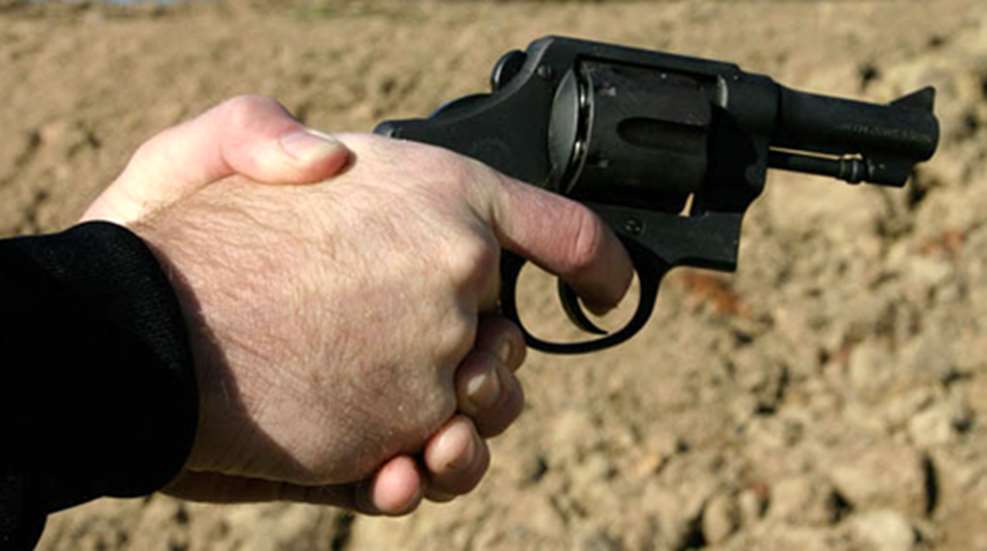
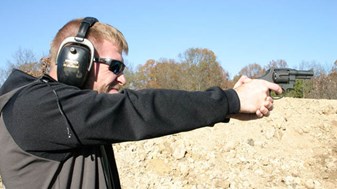
To take the crossed-thumbs style of grip, grasp the revolver in your shooting hand as you normally would. The thumb from the support hand crosses over the thumb of your shooting hand, and the support fingers curl over the front of your other fingers. As with all things new, this grip will feel a little awkward at first—particularly the gap at the bottom of the backstrap.
That said, the grip is simple. I find it effective at controlling recoil—especially on small, hard-kicking guns—and it lends itself naturally to an isosceles stance. Before any of you even think of hitting the "comment" button, let me go on the record with this warning: Don't use a crossed thumbs grip when shooting a semi-automatic. Just as the thumbs-forward grip is a self-correcting technique with a revolver, so is crossing your thumbs behind a reciprocating slide on a semi-auto.
I agree with Benner that this is probably not a grip you want to use if you shoot many different types of handguns, as you can get confused under stress. However, if you're one of the many folks who purchased a lightweight .357 Mag. or .410-bore revolver and are finding the recoil to be a bit harsh, and you don't shoot other guns, this might be a grip worth trying next time you're at the range. I'd like to know what other ways you've found to help manage recoil, because it really boils down to what works best for each individual. The more options we have, the better.