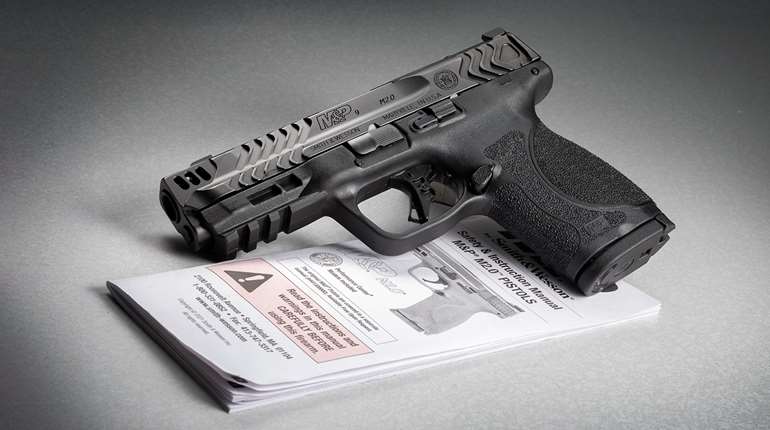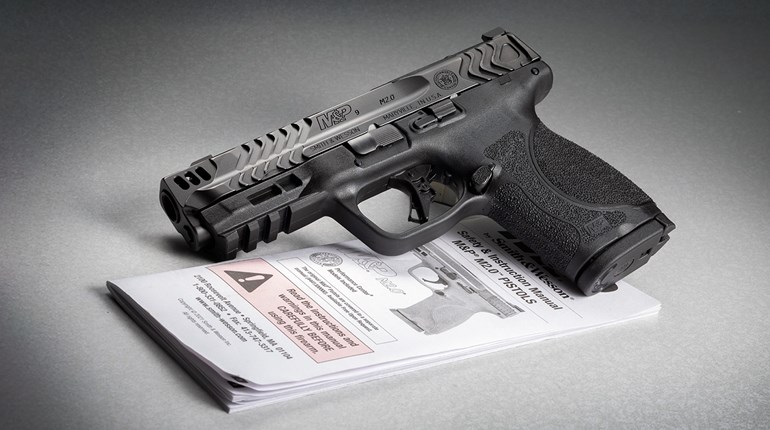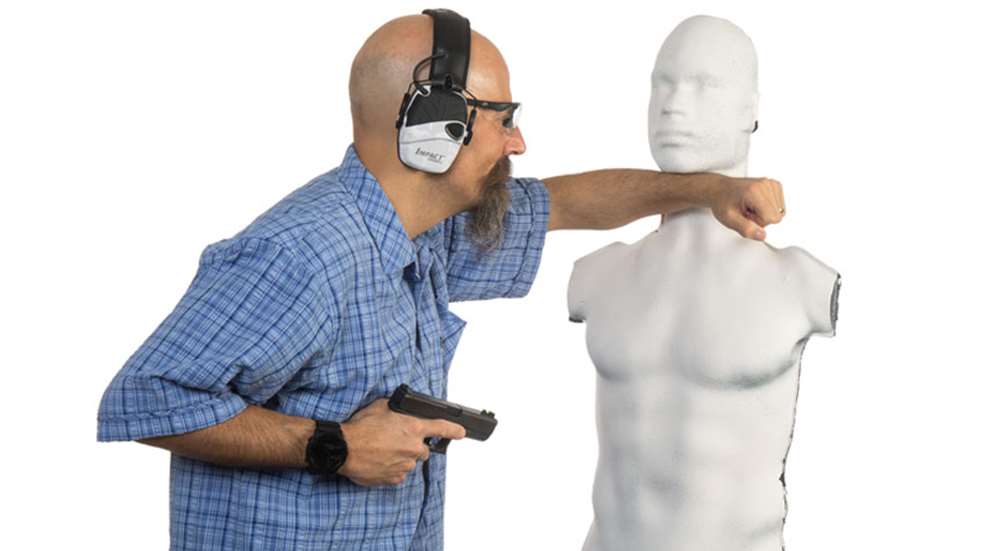
Holding an opponent at bay with your off-hand forearm (while keeping it from slipping in front of your muzzle) can prevent contact between the pistol’s muzzle and your adversary, which could possibly cause a malfunction.
The Problem
In your extreme-close-quarters-encounter class, you were cautioned that contact shots could cause a handgun to malfunction, and possibly not fire at all, leading to an even graver situation. You do not understand why either condition might happen, much less the possible benefit or detriment of shooting an assailant with the muzzle in contact with their person. What are the effective advantages and disadvantages of making a contact shot when involved in a lethal-force encounter?
The Solution
It sounds like your instructor was suggesting that making a contact shot in a gunfight was a concept that one should avoid without getting into the detail of why that might be the case. There are a multitude of reasons a statement like that could be made, ranging from time constraints of the class curriculum to the infinite possibilities of the conditions surrounding a gunfight at bad-breath distance, where most occur.
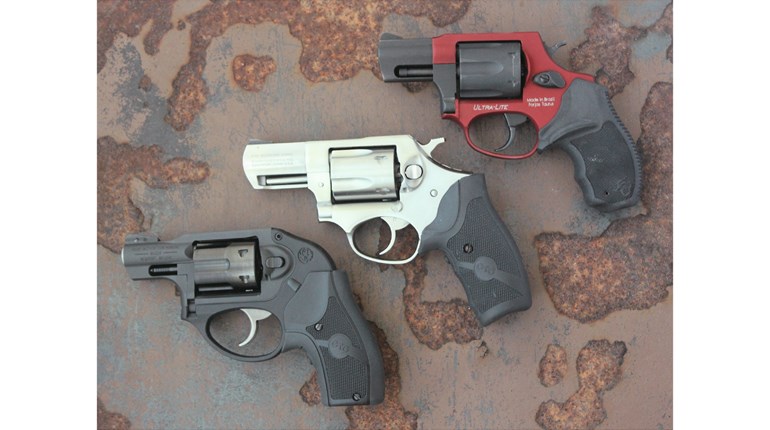
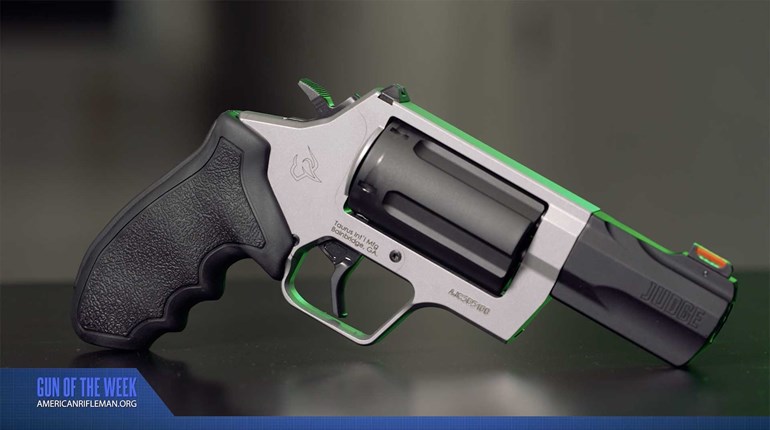
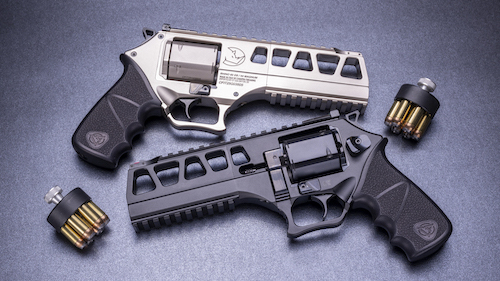
From a purely mechanical standpoint, the type of handgun can determine whether it may fire or not when the muzzle is in contact with the adversary. If a revolver is the handgun of choice, as long as the trigger can be fully pulled and the hammer can fall cleanly, the gun will fire whether the muzzle is in hard or light contact with the target.
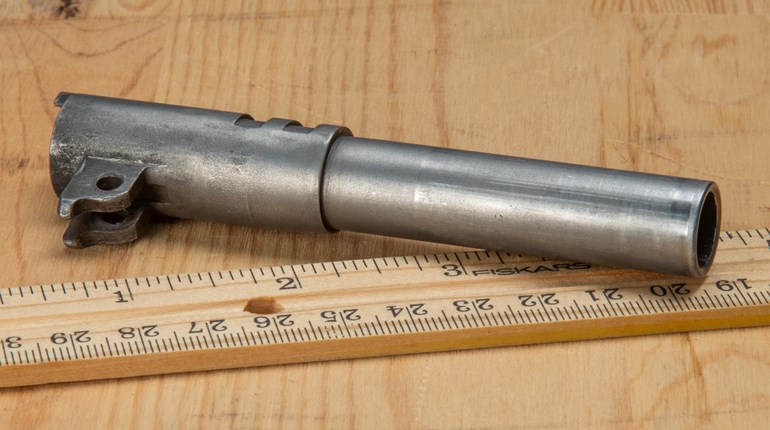
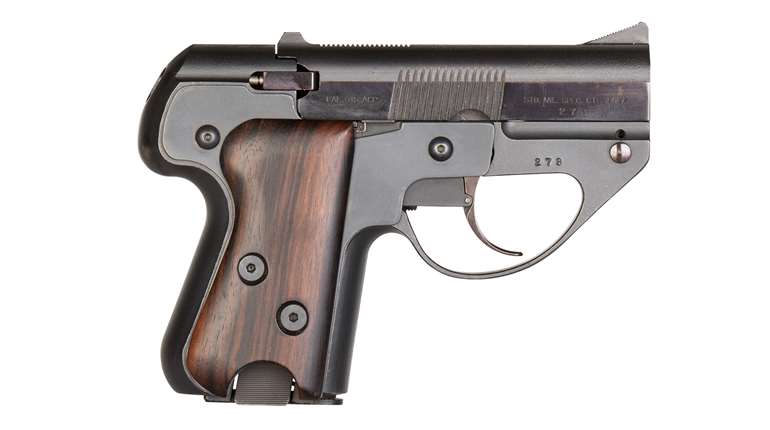
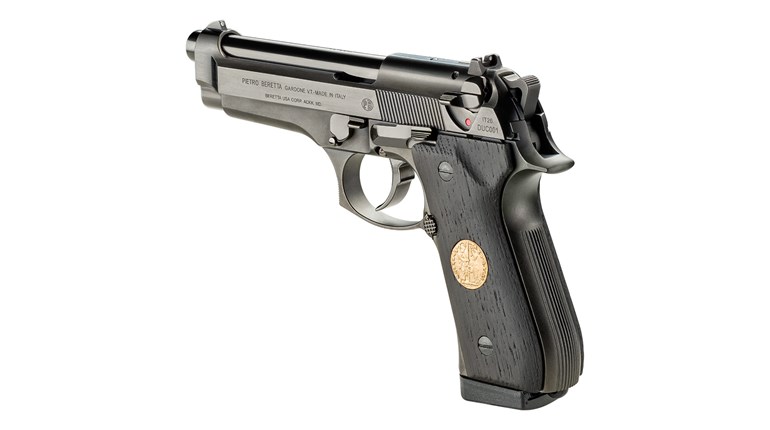
Semi-automatic pistols that have a fixed barrel, which does not move with the slide when the gun is fired, will usually work when only light contact is applied (by light contact, think about pressing the button on an elevator to change floors). Exceeding that degree of pressure may cause the slide to move rearward sufficiently to actuate the disconnector, rendering the gun unable to fire.
Semi-automatic pistols where the barrel and slide initially reciprocate as a unit when fired are more susceptible to failure to fire and function when firmly pushed into contact with the target. It only takes approximately one-eighth of an inch of rearward movement of the slide, in relation to the frame, for the disconnector to operate and disengage the trigger from the fire-control mechanism, suddenly and unexpectedly changing the handgun into a makeshift impact weapon.
In either case regarding semi-auto pistols, the slide must be allowed to cycle fully in order to fire more than one shot. This means that clothing, body parts or other obstructions cannot be allowed to hinder the movement of the slide for multiple shots. During a struggle with one or multiple aggressors in close contact, the likelihood of the slide operating properly decreases, as it is possible to encounter some restriction.
Without going into great detail, the gases from the propellant powering the projectile down the barrel require a degree of consideration in conjunction with the bullet’s penetration into the target. When the muzzle is in contact with the target as the gun fires, the bullet makes the initial penetration followed by a significant amount of high-pressure gases that create additional tissue damage. In some cases, depending on the cartridge fired in a contact wound, the gas-pressure damage to the target equals or exceeds that which was caused by the projectile itself. This is beneficial in stopping the unwanted action of the opponent in a gunfight.
Revolvers pose a separate issue in that gas will escape at the barrel/cylinder gap, which could be detrimental in close proximity to the shooter as well as to the one being shot. In a close-quarter engagement with so many moving parts, it would be difficult to fully control the direction of the gasses escaping from that area of the revolver.
From a tactical perspective, your instructor may have been suggesting that allowing a criminal attacker to come within contact distance, facilitating the possibility of a contact shot, would not be a choice the one would want to make. He is right in that respect, as distance is often your friend in a gunfight.
Contact shots are usually quite effective, but are difficult to administer in a consistent manner during a dynamic confrontation.