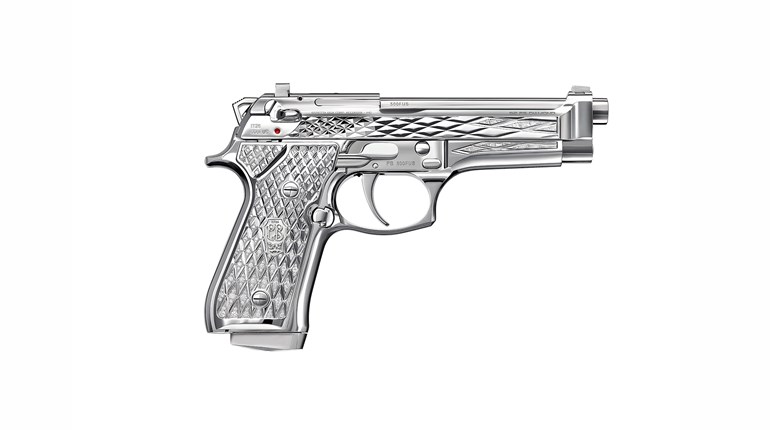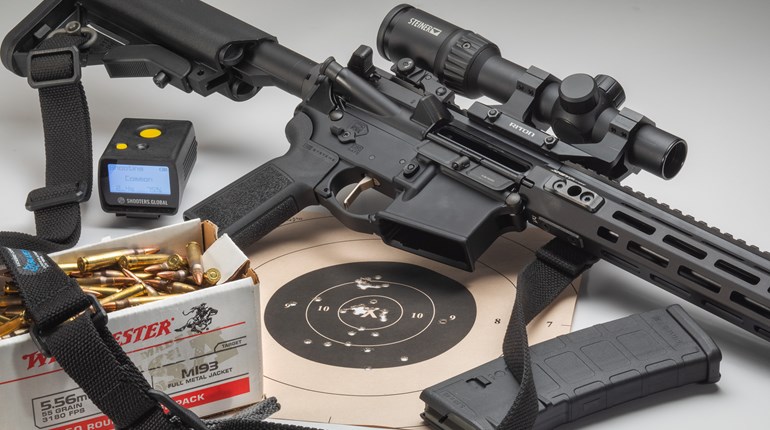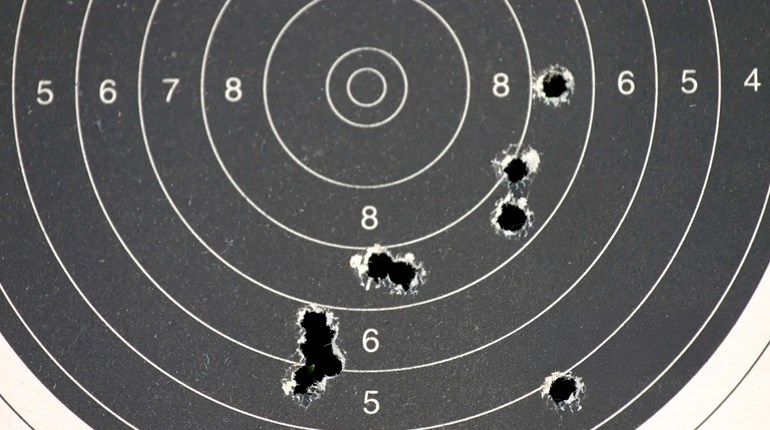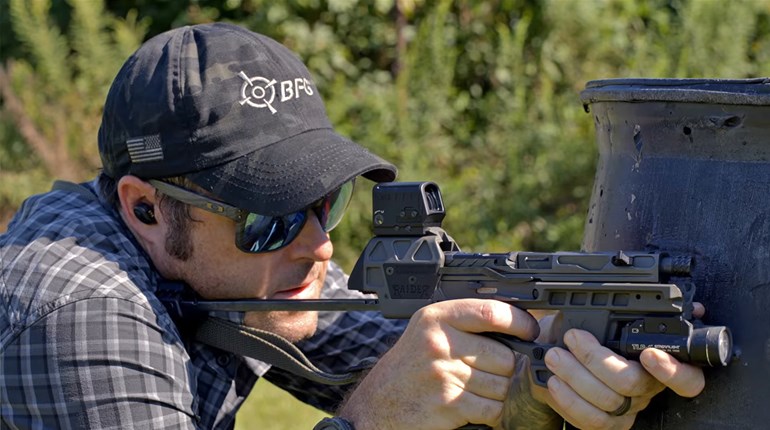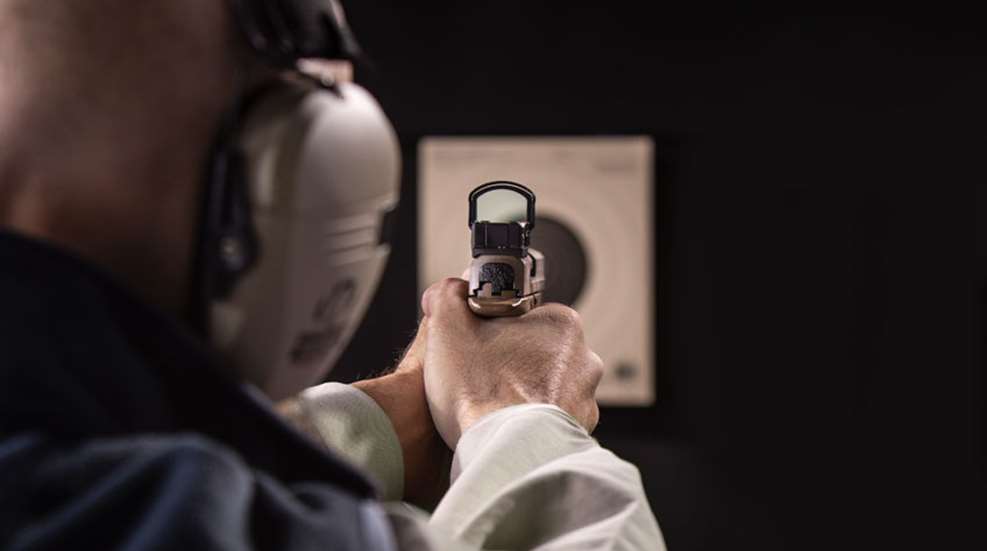
Hitting targets at varying distances with a handgun—even with the aid of a red-dot sight—involves extensive practice to know exactly how much holdover is required.
As you’ve surely noted, red-dot sights on defensive pistols are a thing. Starting with competitive shooters, these sights have spread to police and concealed-carry applications as they have become more reliable and compact. Are they the future? Probably, but likely not in the present form and not right away.
The advantages of handguns with red-dot sights include single-plane sighting and the potential for greater accuracy. The disadvantages include battery and/or sight failure and they can slow down your shooting, that being something of a problem—especially in defensive shooting.
Folks used to traditional sights discover shooting a red dot is all wrong: Rather than aligning sights and focusing on the front sight, with a red dot you look at the target and press the trigger when the dot appears where you wish to hit. Seems simple, but it takes some getting used to.
I mentioned red dots may be slow to use. This happens when the shooter first tries to center the dot in the screen and then tries to get the dot to hold still. Because reflex-style, red-dot sights are parallax free, there is no need to center the dot or align it with the front sight. The bullet will hit at the place the dot seems to be located on the target when the gun fires, regardless of whether it is centered.
As you may have noticed with iron sights, it is impossible to keep them perfectly still and this leads to shooter errors like snatching at the trigger as the sights wander over the point-of-aim. This wobble is more easily seen with a red dot, so shooters often spend too much time trying to hold the dot still or make the same error of jumping on the trigger.
Here’s the thing (with either sighting system): The absence of movement is death—if you’re alive, you are in motion. Accepting this and pressing, rather than jerking, the trigger smoothly will result in a good hit even though the front sight or the dot isn’t still.
There’s another concern with red-dot pistol sights and it has to do with offset. The sight, being located above the center of the barrel, will only be sighted in perfectly at one distance from the target. Closer, or farther away, the point-of-impact will be either high or low.
For example, I recently sighted in a red-dot-equipped pistol for a shooter taking a beginner class who will be confined to shooting at a distance no greater than 15 yards (with most shots fired between 3 and 7 yards). I zeroed the pistol at 3 yards, it shoots reasonably close to the point-of-aim at 5 and 7 yards, it shoots 1 inch high at 10 yards and is 3 inches high at 15 yards.
Here’s the Drill
After zeroing your red-dot-equipped pistol with your carry ammunition at a particular distance, perform this test to determine your offset:
3 yards – Fire five rounds
7 yards – Fire five rounds
15 yards – Fire five rounds
25 yards – Fire five rounds
After shooting at each distance, you should have an understanding of where your pistol is hitting at all ranges, and you’ll know where to hold.