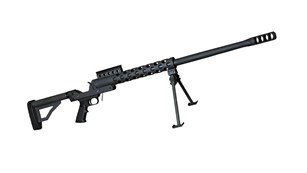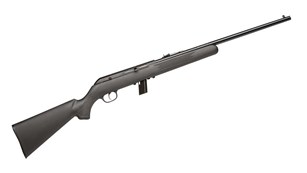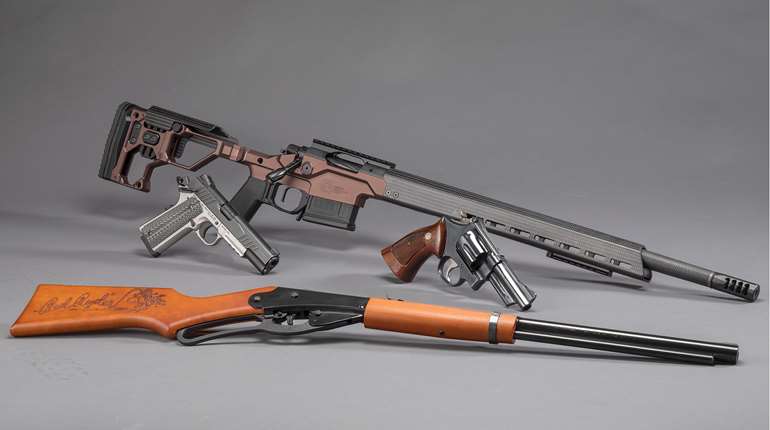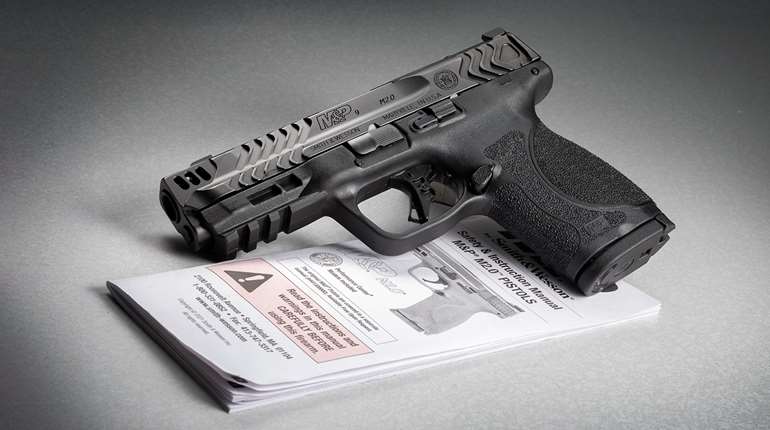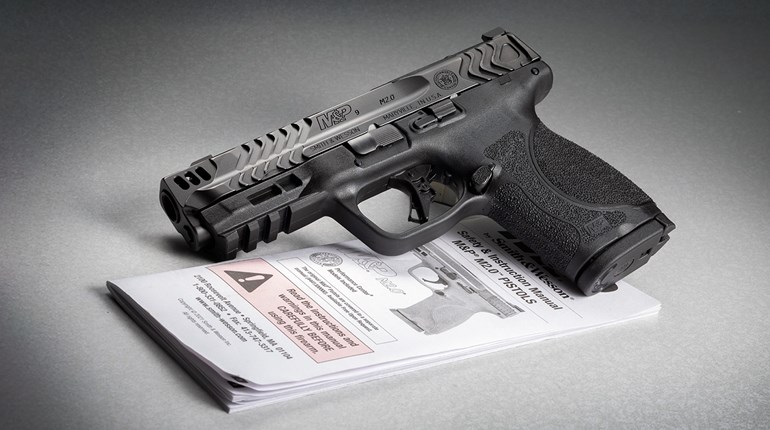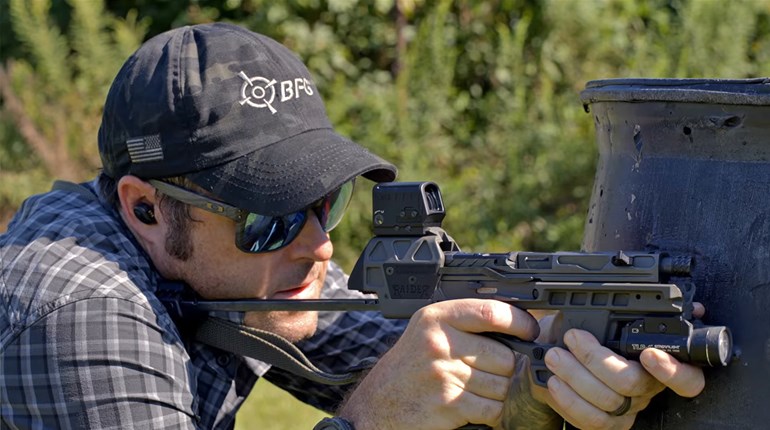
The most fundamental influence of shot placement accuracy is stability. Stability refers to the shooter's ability to maintain connection with the gun in order to facilitate muzzle alignment with the target and effectively manage recoil. Rifles are more stable than pistols for several reasons, including their design, weight distribution and handling.
A primary reason for the greater stability of rifles is their length and multiple contact points with the shooter's body. A rifle's length allows it to be braced against the shoulder, providing a solid anchor point. This shoulder contact, combined with the cheek weld on the stock, support hand on the fore-end and the trigger hand on the stock, creates a stable multi-point contact system. In contrast, a pistol is held with one or both hands in front of the body, relying solely on arm strength and the upper torso for stability, which is inherently less steady.
Rifles typically have more balanced weight distribution compared to pistols. The longer barrel and stock of a rifle help distribute the weight more evenly along the firearm, reducing the tendency for the muzzle to wobble. Pistols, being shorter and lighter, have a center of gravity closer to the shooter’s hands, making them more susceptible to errant input and less stability.
Recoil Management
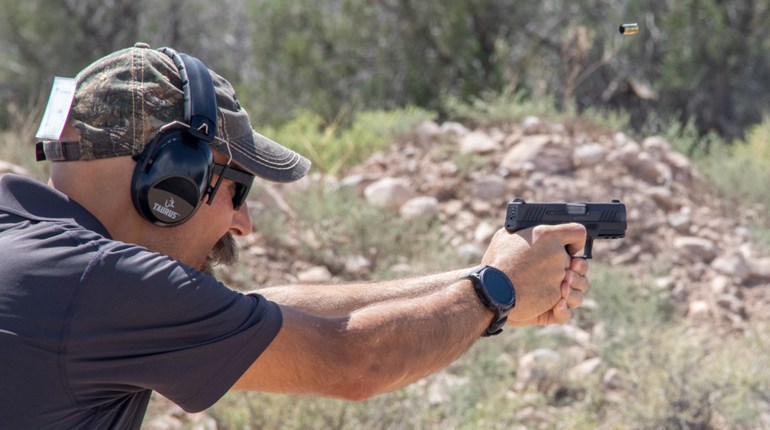
Recoil management plays a significant role in the stability of any firearm. Rifles, given multiple contact points and longer barrels, distribute recoil force vectors over a larger area and a longer duration. This distribution makes the recoil less impactful and more manageable, allowing for quicker target reacquisition. Pistols, on the other hand, direct recoil force through the hands, wrists, elbows and shoulders which is considerably more difficult to control, especially in rapid-fire.
Barring significant barrel porting, muzzle rise is generally more pronounced in pistols than in rifles. The forward hand counterpressure on a rifle plus barrel weight helps counteract this upward force, keeping the muzzle relatively steady. In contrast, the shorter barrel and single-point grip of a pistol are conducive to recoil-induced energy impact or impulse leading to greater muzzle rise and reduced stability in recovery affecting alignment.
Arcs Of Wobble And Red Dot Sights
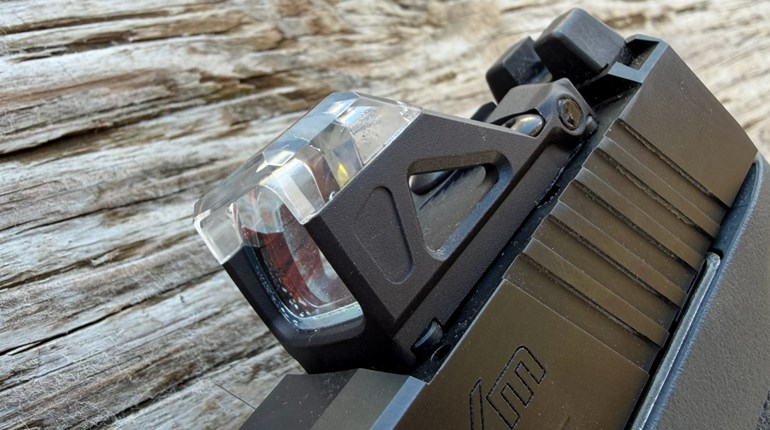
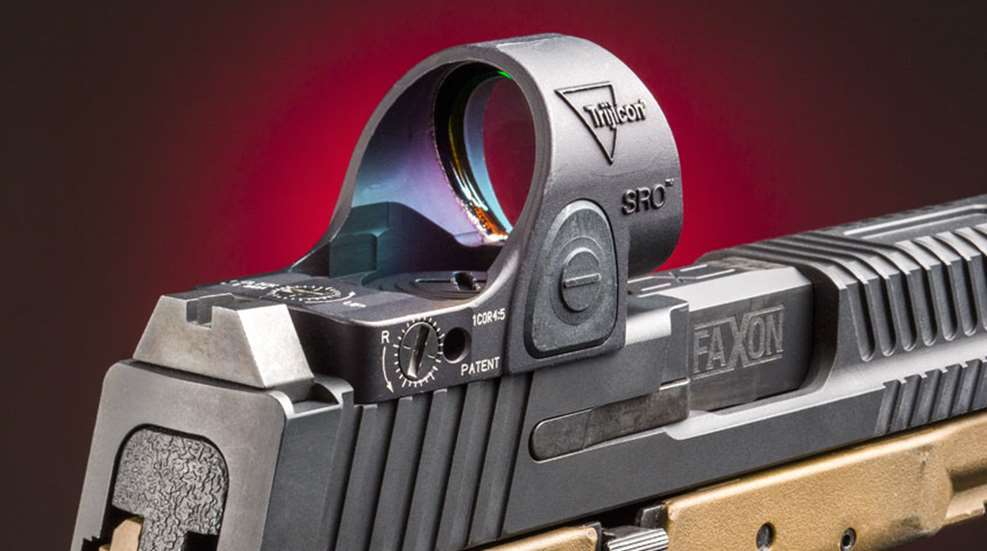
Pistol instability in recoil produces three common Arcs Of Wobble (AOW) experienced by both iron sights and pistol carry optics/red dot systems (RDS) shooters. The RDS more starkly illustrates AOW given its lengthy emitter-to-target sight radius, resulting in one of three recognizable patterns. These are the “J-turn,” the Curly Q” and the “9/10ths input” all of which plague those pistoleros trying to reacquire alignment throughout the muzzle rise and recovery of recoil.
J-Turn
The seasoned RDS shooter will remain fully target focused and although aware of their red dot position, refrains from shifting their focal plane away from the intended impact area. However, somewhere during the recoil process usually around recovery to point of aim the shooter becomes aware of the dot scribing a movement in the shape of the letter “J” at the most inopportune moment – that precise moment of or during the trigger press.
The plight of the J-turn is either to shoot through it and hope for the best, which most likely will cost your accuracy, or wait for it to settle which inexorably costs you time. Neither is an optimal result. Easier said than done, the solution is to maintain good hold control, keep consistent grip pressure or hard visual focus before, during and after rise, recovery and realignment.
Curly-Q
Like the J-turn, the Curly-Q is generally a pre-ignition flinch indicator signifying an introduction of unwanted input into the shooting process. There are several reasons for this but the most common is because of a breach in hold control which is designed to keep AOW margins at an acceptable minimum. Target difficulty such as distance, size, movement and/ or technicality of the shot can greatly exacerbate the consequences of a Curly-Q appearing in your field of vision.
9/0ths Input
Minus a J-turn or a Curly-Q, you may have a relatively stable floating sight within an acceptable AOW for a good trigger press and with predictable recoil rise and recovery timing. However, during that press, you may move the trigger toward the back of the trigger guard at a certain speed and about 9/10ths of the way through your total press you knowingly, or most likely, unknowingly, significantly speed up the remaining 9/10ths of that press inducing errant input so seemingly innocuously that it may have been imperceptible because it occurred nanoseconds prior to, during or most likely at the precise moment of the shot break.
The consequences of errant input are identical to that of a Curly-Q or a J-turn except that there’s no visual forewarning. If you are aware of the detrimental results and catch it in time, you can train yourself to deliver a steady-paced press, avoiding any such speed changes inducing unwanted input, all the way through the shot break.
Distance Makes Things Worse
As with all hold control-impacted-by-poor-triggering issues, target distance amplifies the effects of errors per minute of angle. The greater the distance the wider the angular diversion.
Building and sustaining a durable grip, consistent hold control and laser beam visual focus are the bedrock of stability. The secret to good shot control is to do what it takes to avoid inducing a J-turn, Curly Q or the dreaded 9/10ths errant input by maintaining persistent stability.