For us, “Drill Practice” involves isolating an individual part of a skill and focusing intently on improving or mastering it. The goal with good drill practice is to maximize overall improvement while minimizing overall effort. Success equals consistency over time.
I’m a big believer in consistency. Repeat performance is an achievement marker. Any standard must be observable, measurable and repeatable. In our debriefs, a frequent comment we hear from students was how they didn’t feel consistent. I get it. I’ve been there plenty of times. The follow-up question I get centers on improving. It’s a painstaking process: You must slow things down enough to be performed correctly. If you cannot perform the drill correctly at slow speed, there is little chance you can do it correctly at full speed. That’s why I like this drill so much—It gives me the chance to slow things down. We still have a par time, but it is generous enough to fine-tune the technique.
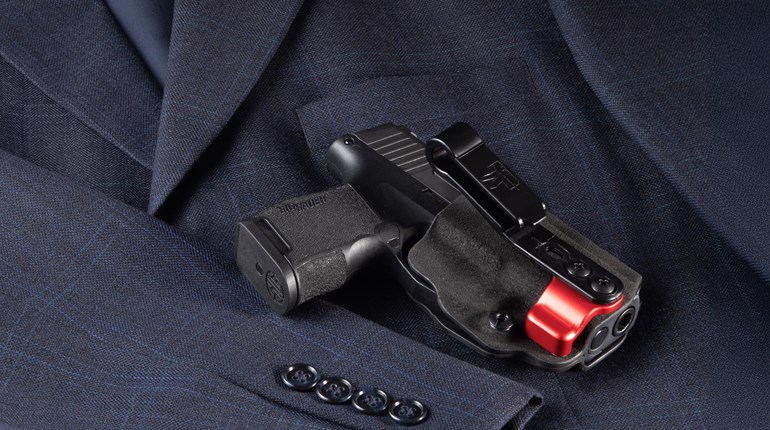
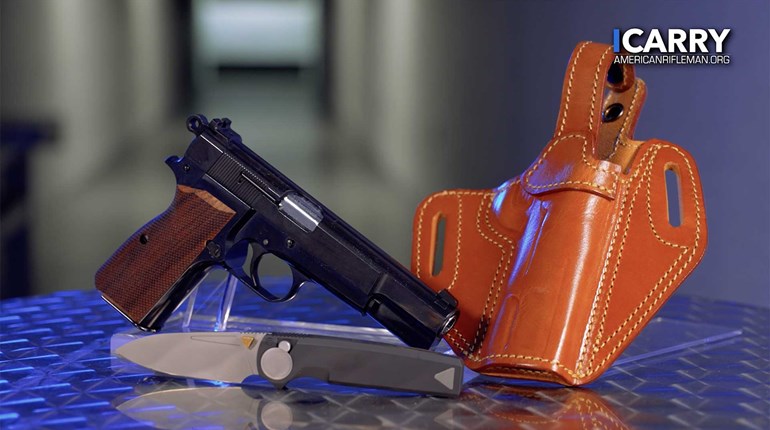
The other thing I love about this drill is its simplicity. There is nothing fancy, just a simple one-round drill performed for 10 repetitions. If you cannot draw from the holster at your local range, then work from the ready position. A decent substitute for not being allowed to draw from the holster is to use a table to rest the loaded pistol. Obtaining a firing grip from a flat surface is more challenging when you add up all the reps. If you are scoring 80 percent or higher, ramp up to a tougher version, which has a 2.5-second par time.
Here’s the Drill:
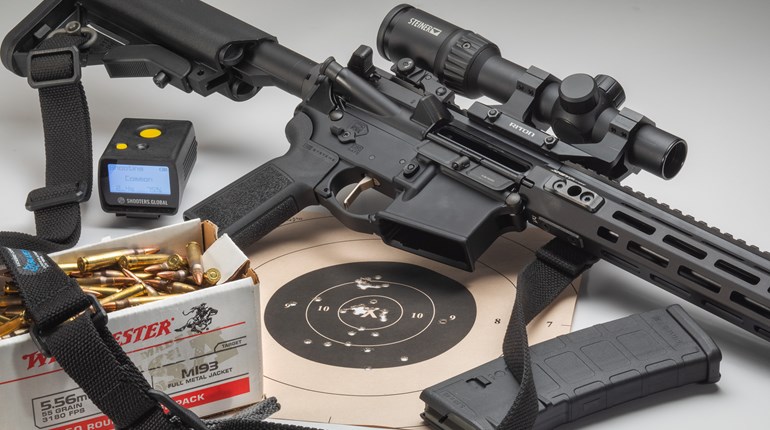
The task is to fire one round from the holster. For this drill, you will perform 10 repetitions total. The condition will be at the 10-yard line. The standard will be against a bullseye-type target like an NRA B8 Repair Center within a 3-second par time and an 80 percent or better score.
• Start with your hands relaxed at your side or on the table.
• On the signal, draw from the holster or retrieve the pistol from the table (if the drawstroke is not allowed, start from the low ready).
• Confirm your sights and fire one round.
• Return to the start position and repeat for a total of 10 shots.
The objective is the consistency of an essential skill. Being able to draw from the holster is one of the many skills we must master. The secret is to take your time, quickly. See what you need to see to make a good shot. Try not to over aim. Once the sight settles on the X-ring, use your time to better squeeze the trigger. Good luck.