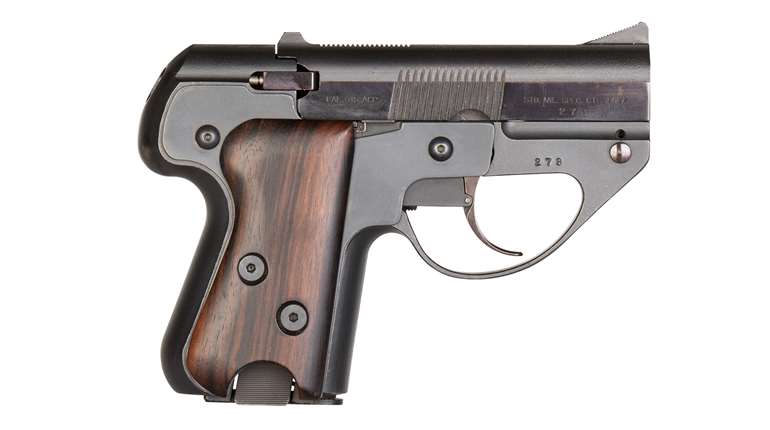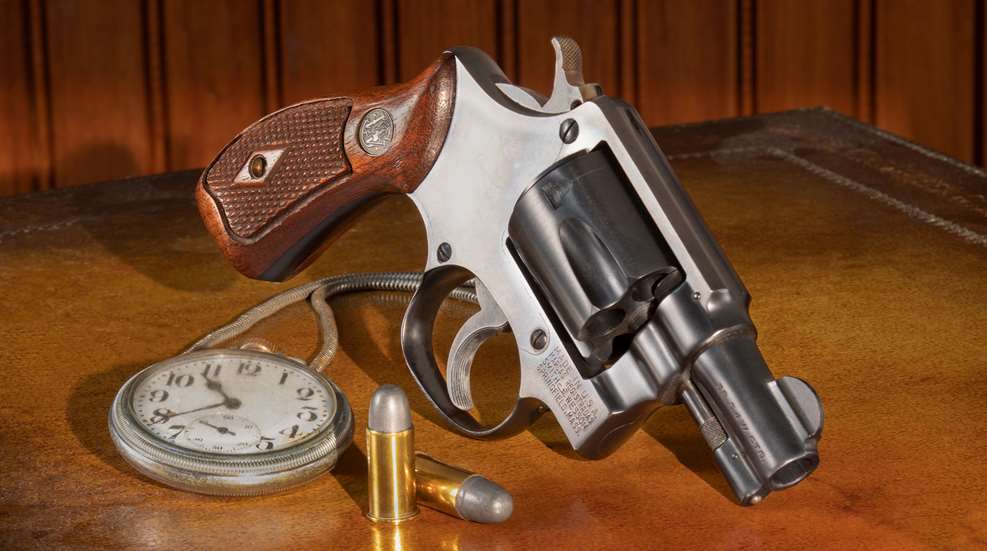
While nicely compact for carry purposes, the Smith & Wesson Terrier’s .38 S&W cartridge displayed poor terminal performance. However, both the gun and the cartridge proved invaluable in what would eventually evolve into the venerable J-frame platform and the popular, proven .38 Spl. cartridge.
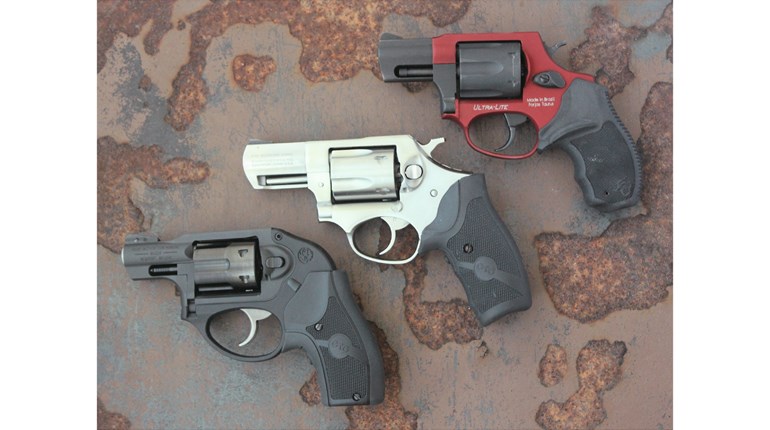
I have no knowledge of the origins of the term “snub-nosed,” nor the derivative thereof: “snubby.” It is slang and means a short-barreled revolver. Some enthusiasts see the broad revolver category as being identified with detectives. It really doesn’t matter if we don’t have precise terminology, but we do have a great many different makes and models of these small revolvers. As a matter of fact, in a time when the service revolver is fading fast, the ones with short barrels are as popular as ever. Taurus and Rossi import them in variety from Brazil, and a few come in from Europe every year. But, the home of the type is right here in the USA. Three of the giant handgun makers—Smith & Wesson, Ruger and Colt—make thousands of short-barrel revolvers, while Charter Arms and Kimber also contribute to the market. Americans like those types of guns, and their history and development is driven by the shooter’s need balanced against industry’s ability to churn them out.
We’ll take a quick look at how the modern, short-barrel defensive revolver evolved, focusing on a particular model that was significant. The gun in question is the Terrier—not only historically important, but also an uncommonly engaging little revolver. Terriers are Hand Ejectors, which is Smith & Wesson’s terminology for several different sizes of solid-frame revolvers. They had swing-out cylinders from which the shooter ejects fired cartridges by hand. The sizes range from the tiny little turn-of-the-century M-frames—known as the LadySmith—to the recent X-frame in .460 and .500 S&W Mag. The .32 Hand Ejector series guns were known as the I-frame series, and most were made in mild .32 and .38 calibers.
In the mid-1930s, Smith & Wesson was going head-to-head with Colt and had just introduced an all-time favorite revolver chambered in .357 Mag. Colt was somewhat ahead in the working-gun class, offering several guns with short barrels, which were very useful for plainclothes police work. Some of them (Pocket Positive) were quite small and easy to pack, but underpowered. Colt’s alternative was the Detective Special, which could handle more powerful ammunition. Something had to be done to compete, and Smith & Wesson came up with the Terrier. This was a petite I-frame, five-shot, 2-inch, round-butt revolver chambered in .38 S&W caliber (not .38 Spl.). It’s important to understand the nature of this older cartridge.
Understand that the .38 S&W cartridge and the .38 Spl. cartridge are not interchangeable in any way. The similarity is in name only, and neither cartridge is truly .38 caliber.
In the Frontier era of the 1870s and 1880s, Smith & Wesson was essentially competing with Colt in the revolver market. The firm wanted a small- to medium-size caliber for its growing array of revolvers. The .38 S&W was a short cartridge that delivered a 146-grain bullet at around 750 fps. Back then, this was considered to be an acceptable defensive choice and was most commonly found in the little New Departure Safety Hammerless (aka “Lemon Squeezer”) revolver. Compare this round with Smith & Wesson’s .38 Spl., which was developed at the end of the 1890s. The .38 Spl. was a longer round and threw a heavier bullet at a higher velocity. Eventually, the .38 Spl. became the most widely used American cartridge of the 20th century.
Understand that the .38 S&W cartridge and the .38 Spl. cartridge are not interchangeable in any way. The similarity is in name only, and neither cartridge is truly .38 caliber. The Smith & Wesson decision-makers may have been pondering some change or upgrade in order to increase the performance in the Terrier revolver, but other events forced them to put the idea on the backburner.
World War II totally interrupted any production of commercial firearms at the Springfield, MA, plant, but when that conflict finally ended, Smith & Wesson’s skilled craftsmen went back to work. Time and new management turned the company into an innovative and aggressive gunmaker once again. By 1950, it looked at the nifty little Terrier and went to work.
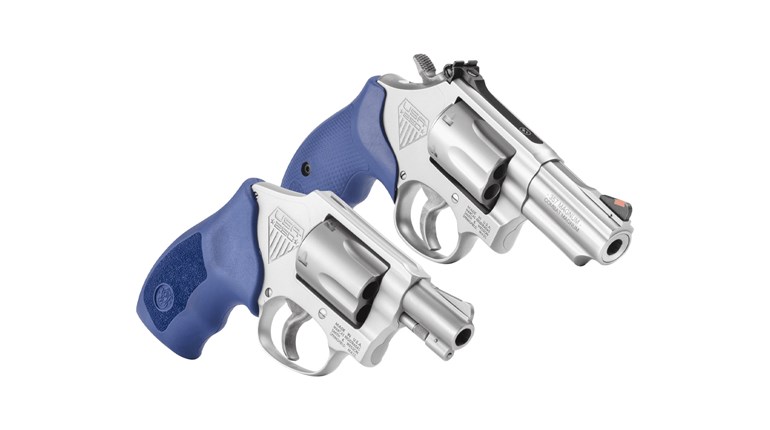
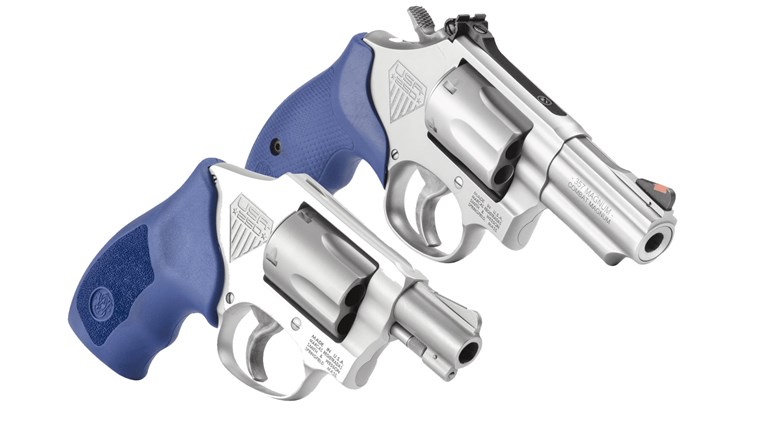
The idea was to find a way to convert the five-shot, I-frame .38 S&W Terrier to fire the .38 Spl. cartridge associated with the six-shot, K-frame Military & Police revolver. Since the .38 Spl. is much longer than the .38 S&W, it would be necessary to build a longer cylinder. That was not too great a challenge, but a longer cylinder would require a longer revolver frame. That was also done. Essentially, this resulted in a completely new revolver-frame size, which the company dubbed the J-frame. It also came up with a name, calling the new gun the Chiefs Special, aka the Model 36 , but it has remained one of the most commercially successful firearms in its catalog.
Nearly all revolvers of the Terrier’s era were finished by hand. To a wheelgunner, handling one of these beautifully crafted little guns is a joy. Carefully polished by a craftsman who really cared, Smiths of that period recall a century-old gunmaker striving to meet the needs of their customers.
It’s a shame that the little Terrier was a little lacking in power to be termed proper fightin’ iron.